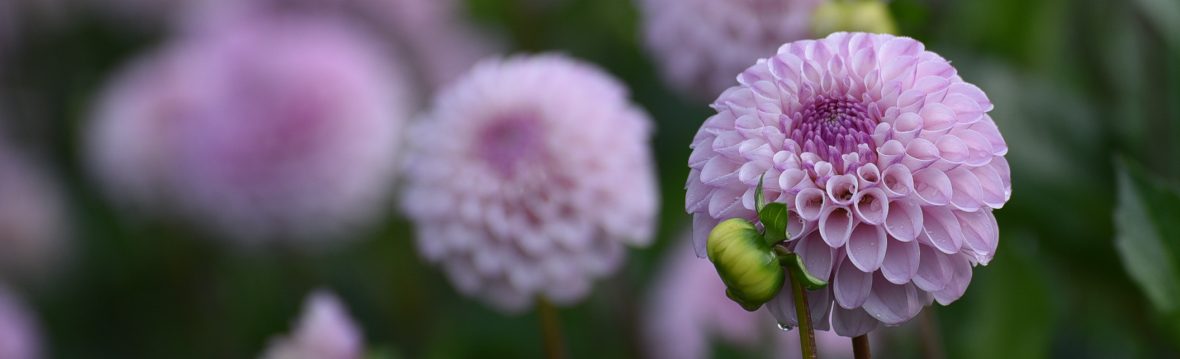
A name to remember… Berner Oberland, Zundert Mystery Fox, Boom Boom White… often creative, often familiar, and sometimes not so much!
Berner Oberland – a beautiful and rather uncommon waterlily variety. The name? Could it be named after a person or a region in Switzerland? I wish I knew!
Zundert Mystery Fox – a lovely ball shaped formal decorative in the most delicious orange tone colour – a little bit coral – a little bit terracotta – a little bit watermelon. The name? Creative?! I’d guess that “Zundert” would be the breeder, and “Mystery Fox” perhaps a creative name…maybe a mystery seedling whose seed parents are unknown? Regardless… a beauty loved in bouquets.
Boom Boom White – a staple white dahlia for the garden or bouquets with it sturdy plant habit and great stems. The name? “Boom Boom” is catchy hey! I’m guessing that “Boom Boom” refers to a series of dahlias produced perhaps by a seed parent(s) and “White” simply distinguishes the colour of bloom in the series (you may also come across Red and Yellow Boom Boom dahlias).
Spring is in the air today in our neck of the woods! The sun is shining, the Canadian Geese are back honking away as they venture farther North… A beautiful day to get some things done outside when we take a break from transplanting dahlia seedlings & petunias … and prepping dahlia tubers for packaging. A favourite time of year to be sure.
Confusion in the garden!!! … You’ve carefully labelled all your dahlias, tended them religiously, and endured the long wait and anticipation to see them bloom. As they grow, you admire their foliage and even may be thinking you know which dahlia you’re looking at without checking the label because its foliage is unique… but then the first bloom appears and its not what you were expecting! The label doesn’t match the bloom! It’s pink not red! It’s short not tall! Its a ball not a cactus! What happened?
Many things can lead to mixing up dahlia varieties. There is not just one single way that it happens, and mix ups happen to just about every grower of dahlias from time to time. Sometimes the mix ups result in happy accidents and sometimes they are disappointing – but all just part of the fun – keep calm and keep growing beautiful dahlias!
Imported dahlias purchased from big box stores, garden centres. The vendor hasn’t grown the dahlia themselves, and so is at the mercy of their supplier to put the correct tubers in the correct packages that you buy and grow. You buy “Thomas Edison” and when it blooms it turns out to be purple but in a ball form…or pink… or white…or….everything but TE!
Smaller domestic farm grower/resellers. Repackaging and reselling “bulk” imported tubers has become more common amongst some smaller Canadian growers in the last 5-10 years. There is opportunity for a large profit margin. These growers supplement their own farm grown dahlia supply by repackaging and reselling tubers bought in bulk or wholesale and often imported from overseas growers. (This is sort of like buying a bag of 5 dahlia tubers like what you’d get from Canadian Tire or Costco and then breaking the bag apart and selling the tubers individually for a premium). This practice created a bit of a stir in the dahlia community when customers led to believe that they were buying “farm grown” realized that the tubers bought thru online shops were not in fact farm grown. Customers now expect domestic dahlia growers to explicitly state on their websites if tubers on offer are farm grown vs imported/repackaged/resold. The same “mix up” problem presents itself as in “1” above where the vendor is at the mercy of the supplier to ensure the correct variety ends up in the hands of their customer.
Cuttings! Growing dahlias from cuttings is a recent trend. There is lots of opportunity for mix-ups here too! Maybe you landed a single “unicorn” tuber and you’re so excited that you take 10 cuttings from this beauty with the hopes of having a garden full of unicorns…only to find out that you end up with 10 “meh” plants that don’t look anything like your unicorn. If you take cuttings from a dahlia tuber that you have not grown, there is a risk that you’ll multiply a mix-up.
Labelling (or lack there of)! So many different methods of labelling and when to label. Labels on tubers, labels on and in storage boxes, labels on stems, labels on trays… Can there ever be enough labelling? Develop a good labelling system that works for you and refine it as needed…
Human error! We’re all human – so be gentle with yourself and others when a mixup happens!
….other ways… I’m sure there’s more…like bad habits! If you’re not sure what a variety is, mark it as such… don’t mix it in with the variety you “think” it might be.
How can you keep your varieties straight?
Make a habit of using a good labelling system. Label tubers. We label with our inventory number and the variety name… and if its a “new to us” tuber we also label it with the source.
Map out your dahlia beds, so you know which varieties are growing where and which are next to which.
During the growing season, when the dahlias are in full bloom is THE BEST time to discover and fix errors by reviewing your blooms to ensure they are what you expected. “Flag” anything that needs a labelling adjustment. Surveyors flagging tape is a great way to tie a label to the stalk with a note to remind you when it comes time to dig and the blooms are long gone. Just make sure you attach the flagging tape to the correct stalk!!! Using permanent markers like sharpies is OK, but know that these have a habit of fading over time outdoors. Using nursery paint or permanent indelible ink markers are a better choice because they resist fading.
When you dig/lift the tubers in the fall, dig and process one variety at a time.
Label storage boxes on the outside and the inside.
If we end up with a tuber that we’re not sure about, it goes into a “mystery” bin (we might add a label to it with a “?” and the variety we think it might be)
You certainly don’t have to label your dahlias! But it really does help to know which is which when you’re planting a lot of them. Knowing the tall or vigorous from the shorter or less robust will help you when you’re planning which dahlia to plant where in your garden.
NOID? What the heck is a Dahlia NOID? … In short, a NOID is a Dahlia who is well loved, grown and nurtured from year to year, but whose name has been lost, forgotten or never known. A NOID is never a Dahlia destined for the compost heap – NOID is a term only used for dahlias that we love and keep. NOID is simply a short reference to “NO IDentification”.
We give our NOIDs a number and a short description that helps us remember which bloom we’re working with during different times of the year when there are no blooms to see (like this time of year when we’re checking our tuber inventories in winter storage). The Dahlia pictured above is known to us only as “040 MM NOID Rocco mislabeled from source”. We’ve hung on to her because we love her qualities.
040 MM NOID is a beautiful dahlia that we see a lot of value in keeping. We acquired her by mistake when we ordered a dahlia named “Rocco” from a grower who sent us a tuber that was not actually “Rocco” but something else entirely… a happy accident 🙂 She’s in the category of very dark red, almost black dahlias – a very nice colour that works with blush pink bouquets – the light in the photo above shows the red in her bloom, but in real life, the bloom looks much darker (see photo below). Beautiful dark stems – an excellent cut flower for bouquets. A good bloomer and often an earlier bloomer for us.
We use these colour cards from the American Dahlia Society to help us narrow down the colour of Dahlia blooms… its super handy and also very interesting to see the blooms next to the cards. Sometimes its hard to get a good match because the colour variations are almost limitless!
“Dahlia 035 MM NOID – Boppa’s Tutie Fruity” is another favourite NOID. Definitely of sentimental value because it’s an oldie from the farm – my Nana and Boppa’s old Dogwood farm on Vancouver Island. But we love it because its got that gorgeous “flare” of yellow and red. Its a stunner in the garden and also is blessed with great stems for bouquets.
“Fire Magic” originally came to us as a gift from my sister Jacklin. But! She was given the name “Coral Nancy” because they didn’t know the real name and so she became known as “Coral” for her bloom’s beautiful coral colouring + “Nancy” for the woman who gave a friend a tuber awhile back… So for a few years we called this one “Dahlia 009 NOID Coral Nancy” until one summer we accidently stumbled across her real name! We ordered a dahlia called “Fire Magic” which turned out to be exactly the same bloom & tuber production as ol’ Coral Nancy… a little confusion in the garden…and then voila! That’s how we solved the mystery of “009 NOID” (an accurate and consistent naming and labelling system helped too!).
We try to solve all the mysteries! But sometimes it takes years. A search on the internet sometimes turns up an exact match but not always. There are thousands and thousands and thousands of dahlias and some are never named (like those for sale in mixed bags of tubers from big box stores and garden nurseries with packaging names like “Ball mix” or “Cactus mix” or “Waterlily mix” or “Decorative mix” or “Dinnerplate mix” or “Cut flower mix” etc. which are usually imported from large growers overseas). In order to make a match, you need to compare the bloom colour, form, and size. You also need to compare the plant’s growth habit and the size, shape, colour and style of tuber production. All these qualities can differ and provide clues to discover the real name of the well loved NOIDs.
More of our beautiful NOIDs! If you think you know the real name – we’d LOVE to hear from you!
Dahlia 016 MM NOID Meg’s fav orange (possibly Glorie Van Noordwijk)
Dahlia 021 MM NOID Red Velvet
Dahlia 109 MM NOID Red/Yellow Cactus
Dahlia 139 MM NOID Dark Maroon Ball
Dahlia 142 MM NOID JJ’s fav purple (gorgeous bright pinky magenta bloom on dramatic dark leaved plant) *Update 2024 we discovered the name is Engelhardt’s Matador*
Sooooo I totally agree, alfalfa sprouts have nothing to do with dahlias! But given that we all have other interests, I thought I’d share one of mine 🙂 … growing our own delicious sprouts for salads and sandwiches! Sprouts are dead easy to grow and and a really affordable way to put healthy food on the table ALL YEAR long!
How long does it take? About 6 days. How much does it cost? Pennies! Can the kids grow them? Yes! Why have you never tried it? I don’t know!
What do you need? While there are probably lots of “sprouting” tools you can spend a ton of money on, you might have everything you need already, and if not, I’ll tell you where I found some of the essentials for a good price (check out Mumms https://sprouting.com/ … currently offering free shipping on orders of $40 CAD or more, by far THE BEST prices for sprouting seeds and sprouting lids that I’ve found).
1 L wide mouth mason jar (I like to have 3 on the go for a constant supply of fresh sprouts)
Sprouting screen/lid
measuring spoons (tablespoon)
small mixing bowl (use as a stand to drain your jar upside down)
fresh cool water
sprouting seeds (alfalfa is a great one to start with for a mild well-loved flavour. I also really like sprouting mustard seeds to add a kick of heat and subtle mustard flavour to sandwhiches… a blend of both is excellent too)
How do I grow sprouts?
Day 1
Add 2 Tablespoons of alfalfa sprouting seeds to a 1L mason jar
Add cool water (about 1 cup – enough to cover the seeds liberally) to the jar
Let the seeds soak for about 6-8 hours or overnight
Day 2
Drain the water from the jar thru the screen and turn jar upside down so that all the residual water drains out (I place the jar upside down on an angle in a mixing bowl)… leave on your counter for the sprouts to germinate at room temperature. Avoid placing them in front of a hot window (North facing window is perfect).
Day 3-6
Morning and/or night fill the jar with water and rinse (twice a day is best (once per day is ok)
(I’ll start another jar of sprouts on day 3 so that we have a continuous supply – but you might like to have more going if you have a big family or less if they are just for yourself… there’s just two of us, so adjust for your own needs)
Day 6. + or –
Rinse and drain the sprouts one last time and eat fresh or refrigerate (drier sprouts store better, so be sure to drain them well).
Favourite way to eat them is with hummus on sourdough with fresh slices of cucumber and tomato… YUM!
3 Jars on the go! The first jar on the far left is on day 3 (I just have it set upside down in a small mixing bowl so that all residual water from daily rinsing drains out). The middle jar has just been started – soaking the sprouting seeds for about 6 hours or so. The third jar on the far right just has 2 tablespoons of seeds added – just ready for adding water to start the germination in about 3 days to keep the sprout train rolling…
Preserving Dahlias… So sooooo many of us long to see the beautiful dahlia blooms all year long! Dahlias (in Terrace, BC, Canada) can bloom from June + or – until first frost, but bloom time is highly variable and dependent on the variety and your growing location, growing conditions and weather. The earliest I’ve had blooms from any of my dahlias in Terrace has been mid-June. More blooms start coming on in July and they are in their full glory in the months of August and September. Come fall, when the temperatures start to dip, we start watching the weather forecast with keen eyes for any indication of frost that will put a quick end to the dahlias for the season…
So how do we preserve dahlias so that they can be enjoyed all year? They are not an “everlasting” flower like strawflowers and statice which hold their colour and shape really well when dried. Dahlia blooms tend to fade to brown and wither away into a crumpled unappealing fragile ugly mess. But that doesn’t stop folks from trying to dry them! I’m not one of them! But, some folks claim to have success drying them with silica… Its just not my jam, but if its yours, give it a go and let us know how it turns out!
My jam is preserving the beauty of dahlias through photography. During dahlia season, I spend hundreds of hours out in the patch with the camera (and iphone – remarkably powerful) snapping photos of our dahlias and then more time downloading them. Then in the off-season I spend a whole bunch more time gazing at all my beauties, choosing photos that I’ll use for the online dahlia tuber shop, editing them, documenting them, and uploading them to the website in preparation for the dahlia tuber sales over the winter. Most recently I commissioned a very talented artist Emily Gagnon of Three Cedars Studio (FB) to paint the dahlia “Good Day” pictured above and I’m just thrilled with her work! I provided Emily with a photo that I captured of “Good Day” for inspiration. Painted on a 12″ x12″ wood board – Emily used a piece of locally milled Yellow Cedar that was an off-cut/scrap piece from The Barn renovations @ Hidden Acres Farm and Treehouse Resort …We’ll be enjoying the beauty of this dahlia all year round for years to come! Thanks so much Emily!
Glorious Dahlia Tubers … a tuber is a tuber is a tuber as long as it has a viable eye from which a new plant will grow. If a tuber does not have a viable eye, it’s known as a blind tuber, and although it may grow roots, it will never produce a new plant. Tubers can be tiny (like the size of your thumb or even smaller) or huge (like the size of your forearm). They can be skinny or fat. They can be long or short. They can have some colour pigmentation or not! They can have thin necks or no necks. They can be “ugly” or “beautiful” and still both produce the same gorgeous blooms that are true to the parent dahlia that produced the tubers. They are even edible! Perhaps a good way to use up blind tubers in a nice “zucchini” style loaf made with peeled and grated dahlia tubers?
Growing dahlias from tubers is the most common and arguably the easiest way to grow dahlias. You may find them available as single tubers, or small clumps (pot tubers – commonly found with imported products in nurseries), or even as large clumps (less commonly found for sale, but often friends or family might offer them this way!). A tuber will carry the same genetics as its parent dahlia – unlike seeds from the same plant, where the genetic variation is so high that a plant grown from seed will usually look substantially different than its parents.
Dahlia tubers are extremely sensitive to freezing and the plants are not hardy – they can’t tolerate a frost. So in Canada, tubers are harvested in the fall, stored over the winter in cool & dark conditions, and then planted again in the spring when the risk of frost has passed (usually mid-May in Terrace, BC, Canada). Some folks in the milder climes of Canada have success overwintering dahlias in the grounds – but there is always the risk of losing them to a freeze.
A freshly washed clump of tubers getting ready to be split and divided into individual tubers, then stored away for the winter.
Dahlia seedlings – what are they exactly? They are magical. They are exciting. They have both the capacity to surprise and disappoint. They are fun. They are so much more than just a plant started from a tiny seed!
What are they NOT? Dahlia seedlings will not grow true to their parents! They may have similar traits, but rarely look the same as the seed or pollen parent. Seedlings can vary from the seed and pollen parents in colour, form, height, tuber production, seed production, pollen production, foliage colour…
The 2022 growing season saw us grow approximately 500 dahlia plants from seed. Of those 500, we kept less than 80 to overwinter in storage and possibly grow out again in 2023. I spent a ton of my summer time in the seedling patch admiring, observing, recording and documenting the new blooms. And all the while I enjoyed the sweetly intoxicating scent of sweet peas wafting across from their trellis (planting sweet peas next to the dahlia seedling patch was an excellent idea!).
Skeena Darling was the first dahlia seedling that we kept back in 2020 (from 2019 seed)! Her own seeds have produced some stunners including the 2022-065 dahlia pictured above.
This was the beginning…where dahlia infatuation and straight up delirium started – thank you Boppa (RIP)! This is my one and only photo of some of the dahlias he grew (taken by a real film loaded camera – way before digital cameras and smart phone cameras were a thing)! It would have been taken in the summer 1995 + or – a few years.
By the look of the brown grass in the field behind the dahlias, it must’ve been a hot dry summer at “Dogwood” farm just outside Victoria on Vancouver Island, BC. The dahlias look like they’re “busting out”, well watered with a healthy dose of “black gold” well-rotted & aged sheep manure applied (ohhhh I’d love to have a big pile of that now!)
I remember once in a while snipping a big bloom to put in a vase in the house for him – but in hindsight I think he actually preferred them to stay in the garden! Good memories of deadheading spent blooms and helping Boppa lift the dahlias in the fall to store them away in the basement. He had great success storing them in whole clumps, in cardboard boxes in an unheated basement. Find more info about digging and storing dahlia tubers on our Dahlia Tips & Care page.